
Managing downward is a skill taught in every corporate training programme; managing upward is an art form rarely spoken about out loud.
When you step into a new leadership role, your primary challenge shifts. You are expected to navigate the complex psychology, competing agendas, and unpredictable emotional currents of senior stakeholders, board members, and chief executives.
When misalignment occurs at this level, standard communication breaks down. If you push too hard, you risk political fallout. If you say too little, you sacrifice your strategic vision and very likely step onto the fast track to executive burnout.
To bridge high performance with humanity, you need a systematic way to evaluate and disarm corporate tension before it compromises your leadership.
When Upward Communication Breaks Down
Upward communication fails when leaders treat professional friction as an interpersonal crisis rather than a structural data point. When a senior stakeholder shifts priorities without warning, or a board dynamic becomes volatile, your nervous system naturally triggers a survival response.
This tension usually manifests in three distinct corporate symptoms:
- The Over-Explanation Loop: Spending hours drafting exhaustive, perhaps defensive, emails to justify strategic decisions.
- Polite Compliance: Agreeing to unsustainable commercial metrics or timelines simply to avoid boardroom discomfort.
- Strategic Isolation: Keeping your head down and pulling away from vital cross-functional partnerships, leaving bad decisions unchallenged.
To interrupt this loop, you must step back and map the relationship objectively.
Introducing the Tyxi Relational Friction Matrix
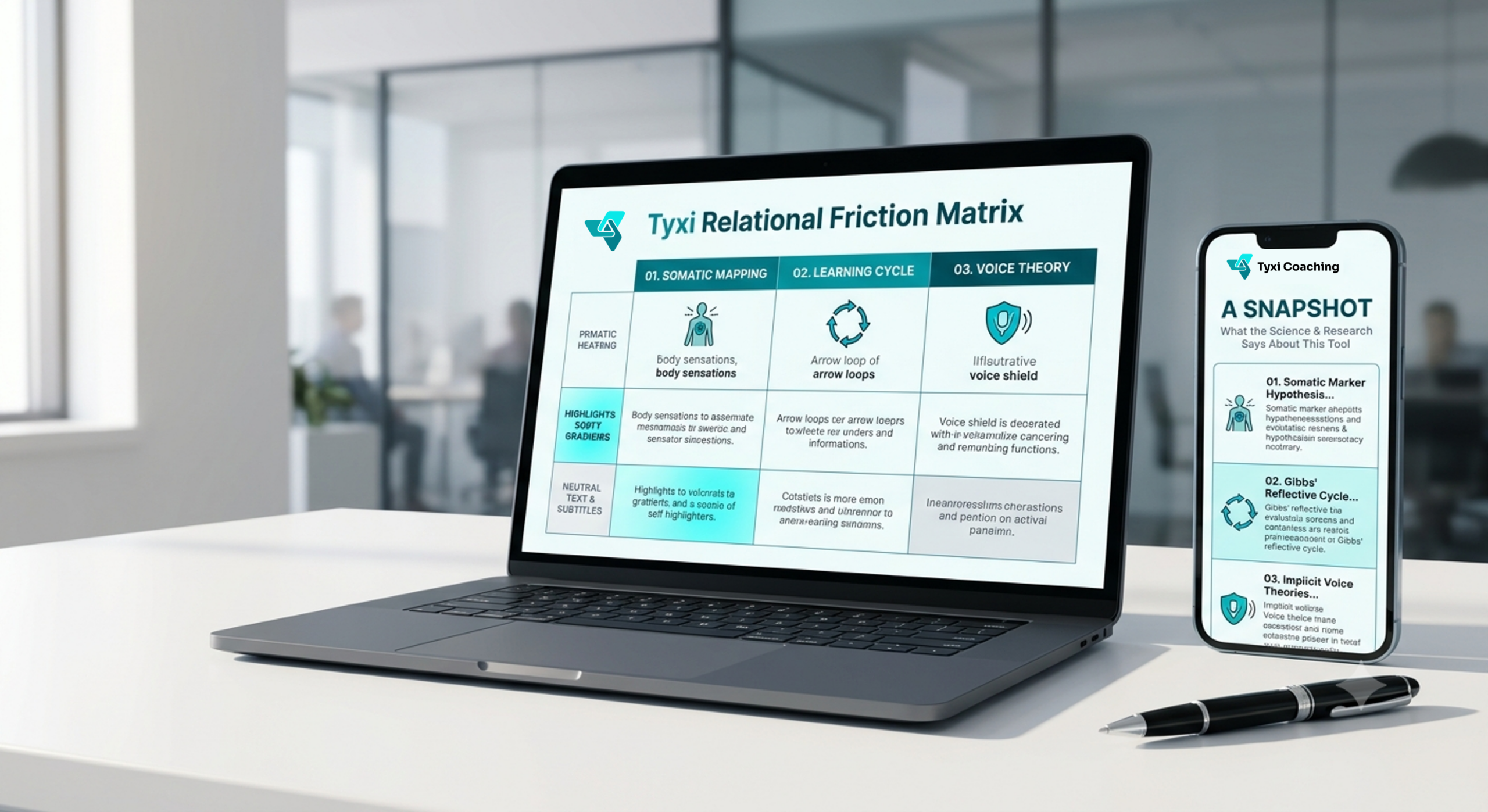
At Tyxi Coaching, we bypass generic conversational advice. Instead, we equip senior leaders with the Tyxi Relational Friction Matrix—a specialised tool built around 18 targeted diagnostic prompts.
This framework allows you to dissect intense professional pressure and categorise exactly where the upward communication breakdown is occurring and why.
The Anatomy of the Matrix
The Matrix maps and assesses your corporate relationships across three critical dimensions:
- The Power Dynamic: Are you communicating from a place of defensive reaction, or are you holding your space with quiet authority?
- The Shared Reality: Is the friction caused by a clash of personal values, or is it a conflict driven by competing organisational metrics?
- The Somatic Response: What physical cues, such as shallow breathing, a tight chest or sudden flushing, are hijacking your clarity during these meetings?
By running your current workplace impasse through these 18 prompts, the structure of the conflict reveals itself. Your self-awareness improves and you start managing both the friction and the system.
Three Rules for High-Stakes Upward Communication
If you are preparing for a critical alignment meeting with senior leadership this week, here is a reminder of simple steps to maintain your calm composure.
1. Translate Humanity into Commercial Language
Senior stakeholders rarely have the cognitive bandwidth for emotional narratives. If a project timeline is unrealistic, avoid appealing to their empathy regarding team fatigue. Prepare to translate that fatigue into financial risk: quantify the threat to retention, compliance, and final deliverable quality.
2. Establish “Momentum Moments”
Use your 1:1 or establish micro-meetings—what we call momentum moments—to flag a communication impasse and gently realign expectations before a minor friction point becomes a roadblock.
3. Control Your Physiology First
Executive presence cannot be faked. If your nervous system is in a state of high alarm, your upward communication will sound inherently defensive. Master high-performance self-regulation before you step into the room, ensuring your voice and posture reveal your authority presence and steady composure.
Secure Your Next Step
You do not have to navigate the isolating pressures of senior leadership in silence. Managing complex corporate systems requires a bespoke strategy and an independent sounding board.
Ready to evaluate your current leadership stamina?
Take the Resilience Pulse diagnostic test today to map your personal roadmap to sustainable executive power.